Aligning R&D Capital With Future Markets: Arkema’s Horizon-Based Portfolio Strategy

Arkema’s Portfolio Management Strategy for Innovation Across Horizons

Innovation strategy in the chemical industry is often discussed in terms of breakthrough technologies, digital transformation, and sustainability targets. Yet in practice, much of corporate R&D effort remains concentrated on short-term business continuity.

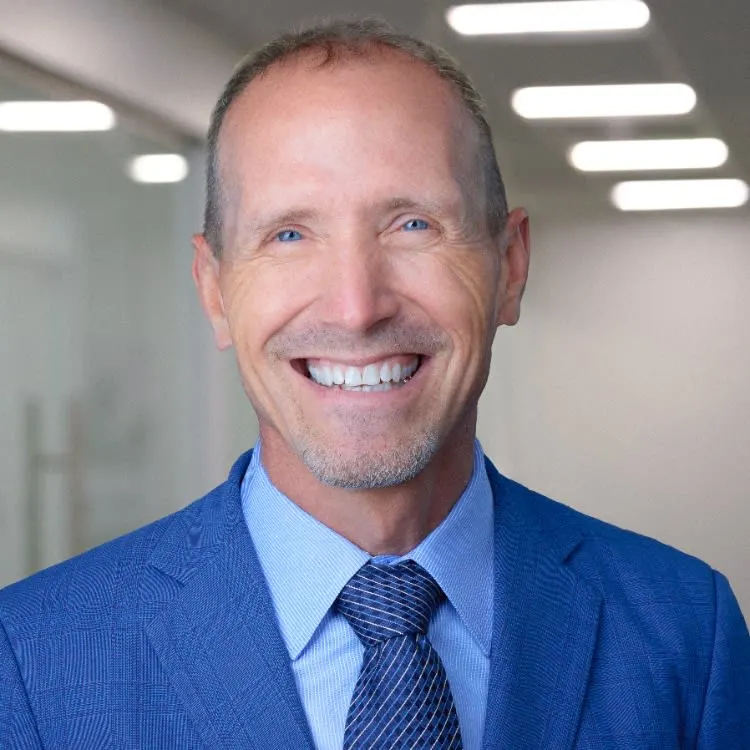
Dave Moss, Director of Technology & Innovation, Arkema

During the session “Adding Elasticity To Innovation For Growth: Arkema´s Portfolio Management Strategy For Innovation Across Horizons” at CIEX, Dave Moss, Director of Technology & Innovation at Arkema, addressed a structural issue that many chemical organizations recognize but struggle to correct: the imbalance between near-term operational priorities and long-term innovation investment.

Drawing on prior experience, he described a business environment in which annual churn approached 30%, requiring the organization to generate equivalent levels of new revenue each year simply to maintain its position. Under such conditions, R&D resources become concentrated on immediate replacement activity, limiting capacity for longer-horizon innovation.

“That was Horizon 1,” Dave noted. “And that business isn’t with us anymore.”

You can explore the full executive summary from the presentation below or watch the complete presentation recording via the link below.

📹 Watch the full Arkema presentation: [Link]


Arkema´s Portfolio Management Strategy For Innovation Across Horizons

Presentation executive summary

The Compression of the Innovation Horizon

The traditional McKinsey three-horizon framework remains a useful reference point for structuring innovation portfolios. Horizon 1 typically addresses immediate product support and incremental improvements. Horizon 2 builds capability in adjacent technologies and emerging markets. Horizon 3 creates options for future businesses.

However, in Arkema’s markets, Moss emphasized that the timeframes associated with these horizons have shortened significantly. In his segment of the business, Horizon 1 may span zero to one year, Horizon 2 one to two years, and Horizon 3 two years and beyond.
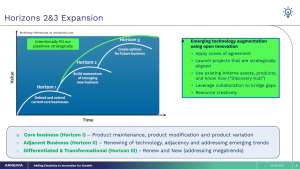
Arkema’s presentation slides at CIEX 2025

This compression alters the risk profile. Organizations that delay Horizon 3 investment are unlikely to feel the impact in five years. They may feel it much sooner.

At the same time, business unit leaders are naturally focused on short-term performance. Horizon 1 supports today’s revenue. Horizon 3 requires protected investment without immediate return.

Without deliberate governance mechanisms, resource allocation tends to drift toward the near term.

“You can Horizon 1 yourself right out of busines,” Dave cautioned.


Structuring Horizon 2 and 3 Innovation: From Strategy to Execution

For Arkema, success in long-term growth depends on a disciplined approach to mid- and long-term innovation, or Horizon 2 and Horizon 3 projects. These initiatives are focused on emerging markets, adjacent technologies, and “out-of-the-box” opportunities where the company may not yet have full capability or commercial presence. To manage this, Arkema leverages Discovery Hubs and engages business unit stakeholders to generate and evaluate potential projects.
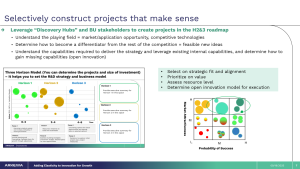
Arkema’s presentation slides at CIEX 2025

The process begins with a clear understanding of the playing field: market needs, application opportunities, and competitive technologies. Projects are then assessed for their potential to differentiate Arkema in the marketplace, with feasibility evaluated against internal capabilities. Where gaps exist, the company actively considers open innovation models, partnering with startups, universities, suppliers, and even select competitors to bridge capability gaps without incurring excessive capital or headcount requirements.

Once feasible projects are identified, they are screened for strategic fit, ensuring alignment with the company’s broader innovation strategy and targeted markets. Prioritization follows a value-driven approach, taking into account potential impact, resource availability, and technical risk. FTE allocations are mapped across business units and time horizons to avoid bottlenecks, ensuring that the company can advance the most promising initiatives efficiently.

This structured methodology not only ensures that Horizon 2 and 3 projects remain aligned with corporate objectives, but also provides transparency and accountability across global R&D operations. Visual tools, such as the horizon planning map, illustrate the allocation of resources, the stage of each initiative, and the integration of open innovation efforts, allowing Arkema to maintain flexibility while systematically pursuing growth options that secure long-term competitive advantage.


Portfolio Governance as Strategic Discipline

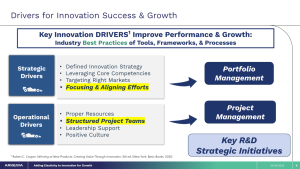
A recurring theme in the presentation was the distinction between portfolio management and project management.

Project management governs execution. Portfolio management governs direction.
Arkema’s presentation slides at CIEX 2025

Within Arkema’s framework, portfolio management serves to align R&D investment with future market positioning rather than current revenue concentration. The objective is to anticipate shifts in customer demand and technology requirements and ensure that capability development is synchronized accordingly.

This requires clarity around innovation pillars, market positioning, and internal capability assessment. Arkema conducts global portfolio reviews at least twice annually to maintain alignment across business units and geographies. These reviews provide visibility into resource allocation and ensure that Horizon 3 initiatives remain structurally supported.

Equally important is transparency around resource deployment. Moss described mapping full-time equivalent (FTE) allocations across business units and quarters. With multiple business units drawing from the same technical resource pool, bottlenecks are inevitable unless proactively managed.

By visualizing these allocations, Arkema can identify future constraints early and make informed decisions about reprioritization, collaboration, or external engagement.

This level of visibility transforms innovation strategy from aspiration into accountable investment management.


Open Innovation as a Resource Strategy

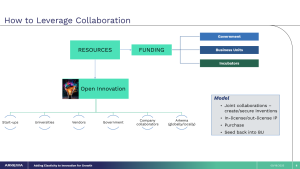
Arkema’s Horizon 3 approach also relies heavily on open innovation, though not in the conventional venture-capital model.

The company does not operate a corporate venture fund. Instead, it seeks structured partnerships that create value for both parties.
Arkema’s presentation slides from CIEX 2025

With startups, Arkema may provide analytical capabilities, laboratory infrastructure, or access to customers rather than direct capital investment. Such arrangements can accelerate technology development while minimizing capital intensity.

University collaboration forms a structured component of the company’s external innovation model. While funding doctoral research is standard practice across the industry, the focus extends beyond early-stage science to commercial translation. Academic innovations frequently face barriers in scaling and market access; established industrial relationships can provide the route-to-market and application validation required to convert laboratory research into viable product platforms.

Collaboration with suppliers and, increasingly, with competitors also plays a role. In a fragmented industry, one company may hold market access while another possesses complementary technical capabilities. Under carefully defined scopes, such collaborations can create value where independent efforts might stall.

In each case, the objective is not openness for its own sake but the efficient extension of Horizon 3 capacity without proportional increases in fixed cost.


Internal Visibility and Organizational Complexity

Large, diversified chemical companies face another challenge: internal fragmentation.

Moss acknowledged that even within Arkema, it can be difficult to maintain full visibility across global business units. In some cases, technical solutions to current challenges may already exist elsewhere within the organization.

Improving internal communication and knowledge sharing is therefore not merely an efficiency initiative. It is part of ensuring that existing capabilities are fully leveraged before external resources are pursued.


Stage-Gate and the Management of Risk

At the project level, Arkema applies a Stage-Gate framework to manage development risk. Project selection is addressed at the portfolio level; Stage-Gate governs execution once strategic alignment has been established.

Training is central to making this system effective. Project teams must understand gate expectations, and gatekeepers must align their evaluation criteria with the appropriate development stage. Without this shared understanding, governance processes can become counterproductive.

The objective is not bureaucracy but controlled acceleration — balancing speed with informed decision-making.


AI Integration: From Operations to Formulation

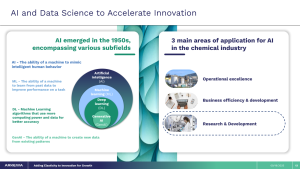
Artificial intelligence is becoming an increasingly important component of Arkema’s technology strategy, with applications spanning manufacturing, supply chain operations, and R&D.
Arkema’s presentation slides at CIEX 2025

At the manufacturing level, structured process data supports performance optimization and operational efficiency. In supply chain management, digital tools improve asset utilization, logistics coordination, and decision-making accuracy. These operational applications are already delivering measurable value.

R&D applications are more complex, particularly in formulation chemistry. Unlike simpler systems, Arkema’s products may involve six or more interacting components, requiring extensive, structured datasets to enable reliable predictive modeling.

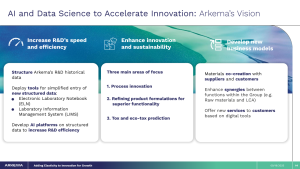
Legacy data often lacks the consistency required for machine learning. Arkema’s response has been forward-looking: ensuring that new experimental data is captured in electronic lab notebooks and laboratory information management systems in formats suitable for future AI deployment.
Arkema’s presentation slides at CIEX 2025

The long-term objective includes predictive modeling of structure–function relationships and, potentially, toxicity and ecotoxicity profiles. If realized, such capabilities could fundamentally alter how sustainability considerations are integrated into product development.


Sustainability as Forward Design

Sustainability pressures continue to intensify across chemical markets. Rather than treating regulatory compliance as a late-stage requirement, Arkema is exploring how predictive tools might inform material design at the earliest stages.

The ability to anticipate environmental and toxicological impact during formulation would shorten development cycles, reduce regulatory uncertainty, and strengthen market positioning in sectors where environmental performance is increasingly scrutinized.

In this context, sustainability becomes a design parameter rather than an afterthought.


Structural Lessons for the Industry

Arkema’s experience illustrates a broader point relevant to chemical industry leadership. Long-term competitiveness is not secured through incremental optimization alone. It requires disciplined portfolio governance, transparent resource allocation, strategic external collaboration, and sustained investment in emerging capabilities such as AI.

Horizon 3 cannot be left to residual capacity. It must be intentionally structured and protected.

For organizations facing compressed innovation cycles, sustainability pressures, and digital transformation simultaneously, that discipline is no longer optional.


Where These Strategic Questions Move From Theory to Practice

The structural issues outlined above are not isolated operational matters; they are shaping board-level conversations across the chemical sector.

CIEX North America 2026 is designed as a working forum for senior leaders addressing disciplined portfolio governance, AI integration, capital efficiency, and sustainability-driven product design. It focuses on the operational realities behind these strategic imperatives.

Join us for two focused days with senior leaders in R&D, innovation, and sustainability across the consumer, industrial, and specialty chemical sectors — tackling:

• Scaling new technologies beyond the pilot phase
• Embedding AI and digital tools into real R&D workflows
• De-risking innovation through the right partnerships
• Turning sustainability targets into profitable product pipelines

Expect practical case studies from leading global brands, proven methodologies, and direct access to senior decision-makers across the chemical industry.

📍 CIEX North America | September 9–10, 2026

If you influence innovation strategy, R&D direction, or technology investment — this is where you need to be.
Sustainability as Strategy: How PPG Powers Growth Through Chemical Innovation

Sustainability as Strategy: How PPG Powers Growth Through Chemical Innovation

Editor’s Note: Peter Votruba-Drzal is Vice President of Global Sustainability at PPG, where he drives innovation and sustainable growth across multiple markets. Peter will speak at CIEX 2025, held on September 17–18 in Indianapolis, U.S.A., alongside leaders from Dow, 3M, BASF, DuPont, and more. Below is a preview of the insights he’ll share at the summit.

Sustainability as Strategy: How PPG Powers Growth Through Chemical Innovation

Peter Votruba-Drzal, VP Global Sustainability, PPG

CIEX: Without giving too much away – what is the core message of your talk and what would you like delegates to remember?

Peter: From supporting communities where we live and work, to developing products and processes that help mitigate environmental impacts and solve our customers’ biggest challenges, PPG’s sustainability commitments contribute to the positive impact we achieve through our purpose and are a key enabler of achieving our growth strategy. 

The most important takeaway for attendees is how critical it is to leverage sustainability as a strategic imperative and business growth driver. We always say that we don’t have a sustainability strategy – we have a business strategy rooted in sustainability and productivity-driving operational excellence for PPG and our customers. Now more than ever, it’s important to collaborate with customers and suppliers to create value through sustainability. 

CIEX: What motivates you to join CIEX this year?

Peter: I feel passionate about the need to collaborate across the value chain to drive meaningful change and work toward collective sustainability targets that are good for business. At PPG, we believe in partnering with a variety of public and private entities to advance technologies and capabilities that create sustainable benefits for existing and future products and services. CIEX provides a venue to foster learning and collaboration.

CIEX: In what ways have emerging technologies most significantly transformed your R&D process over the past few years – and what impact has this had on speed to market?

Peter: At PPG, we aim to be our customers’ first choice partner for innovative paints, coatings and specialty products. Products that provide productivity and sustainable advantages for our customers are instrumental to our growth.

We define sustainably advantaged products using PPG’s internal methodology that validates product attributes and their contribution towards the United Nations Sustainable Development Goals. While many of our products have sustainable attributes in their end-use that promote longevity of customer assets, we consider products sustainably advantaged when they contribute to improved environmental outcomes or provide relative improvements over industry benchmarks. PPG’s internal methodology of sustainably advantaged assessment is utilized not only for existing products but also throughout the new product development process. This development methodology alongside market pull has transformed value creation in the products we develop.

Machine learning is another technology that has begun to transform our research and development (R&D processes.  Routine laboratory tasks like color development, formula cost reduction, and accelerated weathering testing are all examples where machine learning is increasing the speed of our development and allowing our R&D resources to shift to more value creation activities. 

CIEX: What are the biggest challenges – and best practices- you’ve seen in scaling innovation from lab to market while staying aligned with business objectives?

Peter: In PPG’s markets, it is common that an invention in chemistry or formulation is needed to meet the market performance requirements.  In those cases, speed to market can be a challenge due to the discovery cycle. Utilizing a framework of product and technology roadmaps can provide the enterprise clarity on future technology needs. Investment in our teams’ capabilities enables the development of intellectual property, platform development of enabling technology, and internal expertise ahead of the needs within the product development organization. 

CIEX: Open innovation, customer responsiveness, and integrated supply chains are gaining traction. What partnerships or collaborations have been most impactful in driving sustainable growth for your business?

Peter: Partnerships with suppliers and applicators have been most impactful for PPG.  Leveraging strategic suppliers to develop customized raw materials accelerates product development by leveraging the strengths and capabilities of the supply base for innovative solutions.  Partnerships and pilot trials with applicators are extremely important upon scaling a technology from laboratory to end application.  Testing over a range of application variables to define the Process Failure Mode Effects Analysis (PFMEA) is critical to ensure a robust product and successful commercialization.

CIEX: Looking ahead, what do you see as the most critical capability chemical companies must develop to remain competitive in the next decade? 

Peter: I think it goes without saying that sustainably advantaged products and process innovations are the future in our markets. Customers are continually looking for technology that makes them more operationally efficient and delivers superior performance. Beyond customer expectations, regulatory pressures will also accelerate the transition to sustainably advantaged innovations, and companies must be prepared for this shift.

Alongside this, the use of digital tools to create operational efficiency both within your own operations and for your customers is of utmost importance. For example, PPG’s automotive refinish business is delivering share gain by introducing new technology that helps body shops realize efficiency, drive profitability and improve sustainability.

We have long delivered best-in-class technology with the award-winning PPG Envirobase waterborne system. More recently, we have focused on providing ways to make industry-leading platforms deliver more flexibility.   

Out-of-the-can technology solutions include the PPG LINQ™ end-to-end digital solution for global automotive refinish customers. The PPG LINQ ecosystem connects, automates, and digitizes the entire refinish process. It enables painters to modernize the repair processes using its interconnected digital hardware, software, and innovative services.

The PPG MOONWALK™ system, which is the company’s award-winning, automated paint mixing system for refinish body shops, marked the first of many customer-centric innovations that fall within PPG’s digital ecosystem powered by PPG LINQ. This industry-leading system is most notably recognized for its extreme colorimetric precision, significant economic benefits and increased labor productivity. PPG LINQ also features the PPG DigiMatch™ spectrophotometer; PPG VisualizID color visualization software; and the PPG MagicBox body shop assistant. To learn more about PPG LINQ, visit our website.

For more information about PPG, visit our website and most recent Sustainability Report.

CIEX: Thank you so much,  Peter! We look forward to hearing more from you at CIEX 2025!


Secure Your Spot at CIEX 2025 — The Leading Platform for Chemistry & Innovation

Be where senior R&D, innovation, and sustainability leaders from the consumer, industrial, and specialty chemical sectors come together to shape the future.

Now in its 11th edition, CIEX creates real value by uniting decision-makers, sparking collaborations, and facilitating partnerships that drive progress.

📅 September 17–18, 2025 | Indianapolis, U.S.A.

Join the community powering the future of chemistry — digital, sustainable, and collaborative. Gain exclusive insights, connect with peers, and take part in discussions that set the industry agenda.

🎟 It’s the last chance to register– grab tickets today! Register here.

Staying Ahead: How the Chemical Industry Can Remain Competitive Beyond 2030

Staying Ahead: How the Chemical Industry Can Remain Competitive Beyond 2030

In this article, industry leaders from LanzaTech, BASF, Evonik, Dow, DuPont, Syensqo, Arkema, PPG,  Cabot and more share what it takes to lead in a decarbonized, digital future.

The chemical industry is undergoing one of the most significant transformations in its history. To remain competitive beyond 2030, companies must fundamentally rethink how they operate, innovate, and deliver value in a rapidly evolving global economy.

Sustainability, circularity, digitalization, and talent development are no longer optional—they are the engines of growth and resilience. We asked thought leaders from across the industry who will participate in CIEX 2025  to share the critical capabilities that will define tomorrow’s winners.

Their responses make one thing clear: future competitiveness requires bold reinvention, not cautious optimization.

Circularity Is the New Value Driver

For decades, the industry has focused on linear models of production—extract, produce, dispose. This model is no longer viable in a world demanding sustainability and accountability.

“One of the most critical capabilities chemical companies must develop to remain competitive is the integration of circular supply chain principles,” says Jennifer Holmgren, CEO of LanzaTech. LanzaTech’s technology turns waste carbon into raw material, effectively giving emissions a second life. This isn’t just a climate solution—it’s a business opportunity. “This isn’t circularity for circularity’s sake,” Holmgren continues. “There is profit to be made in using our waste to create more product. Companies that invest early can capture more of the value chain, gaining a strategic edge and driving higher margins in a premium segment of the energy market.”

Jean Vincent, Head of RD&I Americas at Evonik, agrees: “The world is changing at a drastic pace. Companies must fully embrace not just the concept of sustainability, but also ways to bring it to reality while maintaining competitiveness.”

Peter Votruba-Drzal, VP Global Sustainability at PPG, reinforces this view: “We don’t have a sustainability strategy—we have a business strategy rooted in sustainability and operational excellence. Collaboration with customers and suppliers is essential to create value through sustainability.”

Sustainability Must Be Embedded in Strategy

To thrive in a low-carbon economy, companies need to embed sustainability into every level of their operations—from raw materials sourcing to manufacturing and product development. “Mastering a circular economy, sustainable renewable sourcing of raw materials, and low-carbon emission processes—along with digital and AI-driven innovation—are imperatives,” says Arthur Martin, VP R&D North America at Arkema. Peter Votruba-Drzal illustrates how this plays out in practice: “We define sustainably advantaged products through a rigorous methodology aligned with the UN Sustainable Development Goals. This approach transforms value creation and is embedded throughout the product development process.”

This approach goes far beyond compliance. Forward-thinking companies are treating sustainability as a competitive advantage, unlocking growth in new markets while aligning with the evolving expectations of regulators, customers, and investors.

A New Mindset for a New Era

For global chemical companies like BASF, the key to navigating future challenges lies in entrepreneurial thinking. “We need to sense how the world is changing and adapt quickly,” says Dr. Amit Gokhale, Director of Process and Chemical Engineering R&D at BASF. “That means adopting new technologies, building new business models, and increasing our tolerance for risk.” He emphasizes that collaboration—between companies, suppliers, customers, and even competitors—will be essential for reducing investment risk and accelerating the scale-up of next-gen solutions.

Patricia Hubbard, SVP and CTO at Cabot, agrees and stresses the importance of adaptability: “Companies must actively seek new information and design systems to evolve under uncertainty to stay competitive.” The CIEX 2025 conference will provide a great opporunity to hear successful case studies, find collaborators and develop new ideas. 

The Digital Leap: AI as a Strategic Capability

In the race to stay ahead, artificial intelligence (AI) and digital technologies are emerging as transformative tools—not just for productivity but for discovery, decision-making, and engagement. “Chemical companies need to adopt AI and build an AI culture,” says Mike Finelli, Chief Technology & Innovation Officer at Syensqo. “This includes leveraging AI for process optimization, accelerated discovery, and customer engagement. It’s imperative to remain competitive in an increasingly digital market.” AI allows R&D teams to reduce trial-and-error in labs, optimize supply chains, and customize products faster and more precisely than ever before.

“The tools available for understanding the science and evaluating the impact of materials are advancing at an unprecedented pace,” adds A.N. Sreeram, CTO and SVP of R&D at Dow. “Companies must stay at the forefront of rigorous analysis while being as nimble and responsive as possible.”

Talent, Trade-Offs, and the Innovation Engine

Technology alone won’t deliver transformation—people will. That means building a workforce ready to lead across sustainability, science, digital, and systems thinking. “Innovators will need to balance often conflicting trade-offs—performance, sustainability, resilience—with an increasing focus on speed,” says Marty DeGroot, VP Technology at DuPont. He emphasizes that innovation must now consider the full value chain and how decisions reverberate across complex ecosystems. “This will require access to modern capabilities and a strong emphasis on talent development and upskilling to use these capabilities effectively.”

Patricia Hubbard adds a crucial lens on timing innovation: “Timing is the hardest aspect of scaling innovation. The best practice is to keep options open, build flexible assets, and invest when customers are ready to scale. This approach helps de-risk growth while aligning with business goals.”

Reinventing the Future—Now

What does it truly mean to be competitive beyond 2030? It means developing low-carbon technologies and circular models—not as side projects, but as core business strategies. It means using AI not just to automate, but to accelerate invention. And it means empowering people across the organization to lead with curiosity, courage, and collaboration. “Chemical companies that invest early,” says Jennifer Holmgren, “can capture more of the value chain from feedstock to final product.”

The challenge ahead is clear—but so is the opportunity. The companies that act boldly today will not just survive tomorrow. They will lead it.


Powering the Future of Chemical Industry at CIEX 2025 Summit

CIEX is the leading platform for senior-level R&D, innovation, and sustainability professionals from the consumer, industrial, and specialty chemical sectors. Now in its 11th edition, CIEX is focused on creating value by bringing together the right people, fostering synergies, and actively facilitating connections among potential partners.

Join us on September 17 & 18, 2025,  in Indianapolis, U.S.A. and get exclusive access to the community powering the future of chemistry — digital, sustainable and collaborative!

🎟Register today to secure your spot!

Advancing Sustainability: The Role of Carbon Capture and Utilization – CCU in the Chemical Industry

Advancing Sustainability: The Role of Carbon Capture and Utilization- CCU in the Chemical Industry

Insights from Celese’s Global Head of Sustainability

The 2024 CIEX North America conference in Indianapolis was a tremendous success, bringing together chemical leaders to share cutting-edge advancements, discuss real-world case studies from global players and build lasting professional connections. The event stood out by fostering meaningful synergies and creating opportunities for collaboration among potential partners.

To give you a glimpse of the insights shared, we are excited to feature an article based on one of the event presentations—delivered by Celanese’s Global Head of Sustainability, Kevin Norfleet. You can explore the session summary or listen to the full audio presentation below:

Kevin Norfleet, Global Head of Sustainability, Celanese

Follow CIEX Summit on LinkedIn for more expert insights and industry updates!


Introduction

As industries worldwide seek sustainable solutions to reduce carbon emissions, Carbon Capture and Utilization (CCU) is emerging as a game-changer. One of its most promising applications is methanol production, a vital component in numerous industrial and consumer products. By adopting CCU, we can move toward a circular carbon economy, minimizing reliance on fossil resources and significantly lowering emissions.

Understanding CCU and Its Industrial Relevance

CCU technology plays a crucial role in reducing carbon emissions by capturing CO2 and converting it into valuable products. Kevin emphasizes that the chemical industry must move beyond theoretical discussions and take practical steps toward implementation. “We could talk about CCU till we’re blue in the face, but if we insist on the perfect solution—using only green hydrogen and direct air capture CO2—the costs will be so extraordinary that nothing’s ever going to happen,” he notes. Instead, he advocates for incremental advancements that align with current economic realities.

“We could talk about CCU till we’re blue in the face, but if we insist on the perfect solution—using only green hydrogen and direct air capture CO2—the costs will be so extraordinary that nothing’s ever going to happen.”

One of the key applications of CCU is the production of methanol, a versatile chemical that serves as a building block for numerous industrial processes. Kevin explains, “With methanol, we then make an incredible array of things… turning methanol into acetic acid, which then transforms into adhesives, construction materials, and other essential products.” By utilizing CO2-derived methanol, industries can significantly lower their carbon footprint while maintaining supply chain stability.

Regulatory Challenges and Market Adoption

Despite the clear environmental benefits of CCU, regulatory frameworks often lag behind technological advancements. Kevin Norfleet  points out the inconsistencies in policy approaches, particularly in Europe. “Within the same regulatory environment, mass balance accounting is accepted for sustainable aviation fuel but rejected for building products,” he observes. This fragmentation makes it difficult for industries to scale sustainable innovations, despite growing consumer and corporate interest in carbon footprint reduction.

Another significant challenge is the disconnect between demand signals along the supply chain. Many large corporations have ambitious sustainability goals but struggle to translate them into actionable procurement strategies. “Oftentimes, demand signals are lost in long supply chains, where smaller intermediaries lack the resources to track and communicate carbon footprint data,” Kevin explains. To address this, he stresses the need for clearer commercial structures that integrate sustainability into pricing models and business agreements.

“Oftentimes, demand signals are lost in long supply chains, where smaller intermediaries lack the resources to track and communicate carbon footprint data.”

The Economic Case for CCU

One of the key takeaways from Norfleet’s presentation is the economic viability of CCU, particularly in industrial hubs like Houston, where CO2 emissions are abundant. “We don’t think there’s ever going to be a shortage of CO2,” he notes, underscoring the potential to harness these emissions for sustainable production. The challenge, however, lies in making the business case compelling enough for widespread adoption.

Celanese has taken a pragmatic approach by ensuring that CCU-derived methanol meets robust sustainability credentials while remaining commercially viable. Norfleet emphasizes that the ultimate goal is to demonstrate market demand: “What success looks like is if I can sell all of this CCU methanol we made and prove that there is a market—then we can go do more.”

Conclusion

CCU methanol represents a critical step toward a more sustainable industrial landscape. While challenges remain, the potential benefits—both environmental and economic—make it a worthwhile pursuit. By fostering collaboration, refining regulations, and creating commercial structures that reward sustainability, we can unlock the full potential of CCU and redefine the future of chemical production.


Are you a C-level professional seeking to establish new collaborations, connect with potential partners, and expand your network? Join us at CIEX 2025 – Chemical Innovation Exchange Summit to hear from and engage with industry leaders, global experts, and innovative thinkers from around the world.

After a celebrated first edition of CIEX North America at The Center in Indianapolis, we are happy to return on September 17&18 2025! Expect an expanded show floor, additional networking opportunities, side events and of course two days of high-level exchanges, networking and discussions.

CIEX is designed for C-level R&D, Innovation, and Sustainability experts from the consumer, industrial, and specialty chemical sectors. Keynote presentations, panel discussions, round tables as well as one-on-one meetings give you every opportunity to connect with the chemical leaders of today and tomorrow.

Get your early-bird ticket today—hurry before they sell out! Limited availability!


Advancing Sustainability: The Role of Carbon Capture and Utilization- CCU in the Chemical Industry

Exploring Digital Transformation’s Impact on Chemical Research with DOW

Exploring Digital Transformation’s Impact on Chemical Research with DOW. CIEX 2024 Speaker Interview with Rui Vogt Alves da Cruz, VP of Core R&D, Dow

Rui Vogt Alves da Cruz, VP Core R&D, Dow

Today, we interviewed Rui Vogt Alves da Cruz from Dow to discuss key insights ahead of his upcoming session at CIEX in Indianapolis this October.

Rui Cruz, vice president for Dow Core R&D, a global Research and Development organization which drives the long-term R&D vision for Dow. Prior to this role, Rui was the senior regional R&D director for the Europe, Middle East, and Africa region and Core R&D director for Europe. He joined Dow in Brazil in 2001, having worked in Human Resources, Customer Services, Technical Services, and Research and Development for several different businesses and technologies.

Read the short interview below to learn more about Rui’s session “Impact of Digital Transformation on Research and Development”.


CIEX: Without giving too much away – what is the core message of your talk and what would you like delegates to remember?

Rui: How the digital transformation is impacting and accelerating chemical and material science research.

CIEX: What motivates you to join CIEX this year?

Rui: The ability to meet and discuss industry challenges with other great leaders in the field. I had a great time participating in CIEX in Europe in my previous role.

CIEX: With deglobalization, circularity and the energy transition as key trends currently shaping the chemical industry, what are the challenges to overcome and opportunities to harness?

Rui: The industry can have a great impact to the overall sustainability challenges, both in terms of improving our own footprint and also providing our customers with products and technologies that will support decarbonization and circularity journeys.

CIEX: What is one project or initiative in the industry, outside of your own company and associations that really inspired you recently, and why? 

Rui: Our overall decarbonize and growth strategy, and specifically our Path2Zero project with a carbon-neutral cracker and derivatives plant in Alberta, Canada is extremely exciting and demonstrates how technology addresses our sustainability challenges, meets customer and market needs and generates great business.

CIEX: Thank you so much, Rui! We look forward to seeing you at CIEX 2024!


The 10th Annual Chemical Innovation Exchange Summit (CIEX) is created for C-level R&DInnovation and Sustainability experts from the consumer, industrial and speciality chemical sectors.  This intimate event is about creating value – bringing the right people together, creating synergies, and actively connecting with potential partners. CIEX will take place in Indianapolis on October 23-24.  Companies presenting include Dow, Ashland, Cargill, Huntsman, Monument Chemical, US DOE, BASF, The Heritage Group, and many more.

Secure your spot at the CIEX Summit and register today!

Exploring Digital Transformation's Impact on Chemical Research with DOW.

Circular Economy: How Specialty Polymers Can Enable Sustainable Solutions – Insights from CIEX 2024 Speaker

Circular Economy: How Specialty Polymers Can Enable Sustainable Solutions – Insights from CIEX 2024

Speaker interview with David Thomas, Global R&I Director, Specialty Polymers, Syensqo

CIEX: Without giving too much away – what is the core message of your talk and what would you like delegates to remember?

David: During the panel session my core message will focus on how specialty polymers can be a key enabler of the circular economy, but there are still some important challenges to overcome. I aim to emphasise how Syensqo is leading the way in developing advanced materials that not only replace traditional ones but also contribute significantly to sustainability efforts. I want delegates to remember that the chemical industry holds a pivotal role in this transition, and by innovating responsibly, we can create materials that support a more sustainable and circular future.

David Thomas, Global R&I Director, Specialty Polymers, Syensqo


CIEX: What motivates you to join CIEX this year?

David: I am motivated to join CIEX this year by the opportunity to engage with other thought leaders and innovators in the chemical industry. CIEX offers a unique platform for exchanging ideas, exploring emerging trends, and forging strategic partnerships. The focus on innovation, sustainability, and R&D aligns perfectly with Syensqo’s mission to push the boundaries of what’s possible with specialty polymers. Additionally, I am eager to contribute to and learn from discussions on how we can collectively navigate and shape the future of our industry.

CIEX: With deglobalization, circularity and the energy transition as key trends currently shaping the chemical industry, what are the challenges to overcome and opportunities to harness?

David: The challenges we face include the need to rethink supply chains to ensure resilience and adaptability in a deglobalizing world, developing technologies that enable true circularity, and accelerating the transition to renewable energy sources. In the public sphere, the regulatory landscape needs to be updated to better enable the new circular economy.  However, these challenges also present significant opportunities. By embracing circularity, we can drive innovation in recycling and waste management, creating new business models and revenue streams. The energy transition offers a chance to develop cutting-edge materials for clean energy technologies, positioning the chemical industry as a key player in the fight against climate change.

CIEX: What is one project or initiative in the industry, outside of your own company and associations that really inspired you recently, and why?

David: One inspiring chemical industry project that has recently gained attention is the ChemCycling initiative by BASF. Launched in 2018, this initiative focuses on the chemical recycling of plastic waste that cannot be effectively recycled through mechanical means. The process involves converting mixed plastic waste and end-of-life tires into pyrolysis oil, which is then used as a feedstock in BASF‘s production, effectively replacing fossil resources.

This project is inspiring because it showcases how innovative thinking in chemistry can provide solutions to complex environmental challenges while also addressing the real challenge of reverse logistics. It demonstrates the potential for the chemical industry to be a leader in sustainability and circular economy principles, rather than being seen solely as part of the problem.

CIEX: If the future of the chemical industry is high-tech, low carbon – what are 3 essential elements needed today, to realize this?

David:

  1. Investment in R&D: Continuous investment in research and development is critical to discover and commercialise new materials and technologies that are both high-performing and environmentally friendly. This includes advancements in recycling technologies and the development of biodegradable or bio-based polymers.
  2. Collaboration and Partnerships: Building strong collaborations across the value chain from raw material suppliers to end users is essential. By working together, we can accelerate innovation, share best practices, and develop integrated solutions that address the complex challenges of sustainability.
  3. Regulatory Support and Incentives: Governments and regulatory bodies play a crucial role in shaping the industry’s future. Supportive policies, incentives for green innovations, and stringent regulations on carbon emissions and waste management can drive the industry towards a more sustainable path. These elements create an environment where sustainable practices are not only encouraged but also economically viable.

CIEX: Thank you so much, David! We look forward to seeing you at CIEX 2024!


The 10th Annual Chemical Innovation Exchange Summit (CIEX) is created for C-level R&DInnovation and Sustainability experts from the consumer, industrial and speciality chemical sectors.  This intimate event is about creating value – bringing the right people together, creating synergies, and actively connecting with potential partners. CIEX will take place in Indianapolis on October 23-24.  Companies presenting include Dow, Ashland, Cargill, Huntsman, Monument Chemical, Evonik, Celanese, US DOE, BASF, ACS, AdvanSix, The Heritage Group, and many more.

Secure your spot at the CIEX Summit and register today!

How Specialty Polymers Can Enable the Circular Economy: Insights from CIEX 2024.

Pioneering Sustainable Innovation: Ashland’s Strategy for a High-Tech, Low-Carbon Future

Pioneering Sustainable Innovation: Ashland’s Strategy for a High-Tech, Low-Carbon Future. Interview with CIEX NA speaker- Osama M. Musa, senior vice president and chief technology officer, Ashland

CIEX: Osama, thank you for joining the speaker panel for CIEX 2024! Without giving too much away – what is the core message of your talk and what would you like delegates to remember?

Ashland (NYSE: ASH) is a global, consumer market-focused additives and speciality ingredients company that is responsibly solving for a better world. Through science and a conscious and proactive mindset for sustainability, we invented “new to the world” technology for customers in pharmaceutical, personal care, architectural coatings, construction, energy, food and beverage.

CIEX: What motivates you to join CIEX this year?

Osama M. Musa, SVP & CTO, Ashland

Ashland has launched exciting, new technology platforms aligned to our core that extend to secondary markets with new and differentiated capabilities to unlock organic growth for us and for our customers worldwide. We believe our platform solutions are applicable to CIEX because they bring “new to the world”, sustainable innovations, offering choice to customers, prospects and consumers in personal care, pharma, coatings and more. These technology platforms enable users to reshape global megatrends and respond to various regulatory landscapes. If CIEX C-level R&D, Innovation, and Sustainability experts aren’t familiar with them, or the capabilities they can bring, they should contact us to meet and learn more. 

CIEX: With deglobalization, circularity and the energy transition as key trends currently shaping the chemical industry, what are the challenges to overcome and opportunities to harness?

At Ashland, we are passionate, tenacious scientists who thrive on answering the most complex challenges. We view deglobalization, circularity and energy transition as opportunities and we consider environmental, social and governance (ESG) as part of our strategic business and operating plans. 

Product design and lifecycle management – Ashland takes a holistic innovations approach with environmentally responsible, cradle to grave consideration, incorporating upcycling and circularity models that proactively help customers manage the lifecycle of their products. This includes inception through the engineering, design, and manufacture, through service and disposal, reuse, or biodegradability in the environment. We understand the desire that every product must be accounted for at every stage of its life. 

Innovation and technology – Ashland is at the forefront of the design, synthesis and production of additives and specialty ingredients essential to everyday life and we take an innovative approach to answering our customers most complex challenges. This includes waste and hazardous materials management. As a responsible care company, we strive to mitigate and continuously reduce our manufacturing risk and we have robust management systems to help ensure we are operating responsibly and transparently. 

Ashland is managing our environmental footprint by tracking and working towards science based targets to reduce our manufacturing footprint through renewable energy and energy efficiency projects. Our R&D, commercial and manufacturing teams are identifying creative solutions that drive towards lean manufacturing and continuous improvement.   

CIEX: If the future of the chemical industry is high-tech, low carbon – what are 3 essential elements needed today, to realize this?

First, regarding climate change risks and management, Ashland has set near term science-based targets to help continue to reduce our emissions as a part of the broader global initiative to limit global warming to 1.5C. We are both assessing and responding to climate risk in our operations and supply chain because this is an important part of our long-term business continuity. As a global company with sites in many countries around the globe, moving to low-carbon manufacturing is complex yet essential to realizing our goals in the manufacture and delivery of safe products and solutions for customers and the environment.

This includes employing Good Manufacturing Practice principles in personal care and life sciences; minimizing quality risk through robust risk assessment and mitigation; increasing natural, nature derived, biodegradable and sustainable in use product solutions and eliminating or reducing hazardous chemicals through innovative processing and manufacturing of products. 

The long-term success for Ashland as well as our customers also must include operating transparently. Credibility over time builds trust. And that trust only comes from clear transparency in everything we do. Therefore, as we solve, we take a steadfast adherence to core values to avoid conflicts of interest and consistently track and hone accounting practices. Our board of director members, committees and ESG work groups focus on ESG transparent management systems.  

Second, Ashland’s business model resilience includes responsibly innovating which means high engagement with customers and industry ecosystems to customize, invest and explore new growth initiatives so we deliver consistent and reliable value for stakeholders. Ashland has a strong innovation culture and capabilities, and we have aligned our technology portfolio where environmental, social and governance (ESG) is a growth and innovation opportunity.  

And third, ethical corporate behavior and safety is at the foundation of everything we do. We strive to be transparent and ethical in all that we do and have a robust system of ethics and compliance controls that ensure we operate in a legal and fully ethical manner. 

Ashland has an effective and active governance structure and mechanisms where ESG is integrated into our board and senior leadership activities and oversight. Our employee and leadership compensation are tied to our sustainability performance to drive ownership, accountability, and continued success in our initiatives.


The 10th Annual Chemical Innovation Exchange Summit (CIEX) is created for C-level R&DInnovation and Sustainability experts from the consumer, industrial and speciality chemical sectors.  This intimate event is about creating value – bringing the right people together, creating synergies, and actively connecting with potential partners. CIEX will take place in Indianapolis on October 23-24.  Companies presenting include Dow, Ashland, Cargill, Huntsman, Monument Chemical, Evonik, Celanese, US DOE, BASF, ACS, AdvanSix, The Heritage Group, and many more.

Secure your spot at the CIEX Summit and register today!

Enhancing Domestic Supply Chains and Recycling Critical Battery Materials 

Enhancing Domestic Supply Chains and Recycling Critical Battery Materials with Cirba Solutions

Interview with CIEX NA 2024 speaker -David Klanecky, CEO, Cirba Solutions


CIEX: Without giving too much away – what is the core message of your talk and what would you like delegates to remember?

David Klanecky CEO Cirba Solutions

David Klanecky
CEO
Cirba Solutions

David: During my session at this year’s CIEX NA, I want attendees to understand the critical need for enhancing our domestic supply chain, ultimately becoming less reliant on foreign entities for critical materials and ensuring we work toward something that is sustainable for all parties in the supply chain.

To do this effectively, we need to shift the paradigm on how we source raw materials domestically and create a closed-loop approach supply of critical battery materials. By sourcing domestically, and specifically recycling and reusing, we can have a significant impact on cost and reduce the carbon footprint. 

The demand for critical, battery-grade materials is rapidly outpacing supply, especially due to the rapid growth of electric vehicles. With EV adoption projections over the next 10 years, recycling is a crucial component to meeting the supply and demand. These materials can be used over and over again, they are infinitely recyclable. And that is where recycling comes in. The largest mine we have today is on our own roads and in our homes – in our junk drawers, the tools in our garage, and even our electric/hybrid cars. 


CIEX: What motivates you to join CIEX this year?

David: As chemical engineers and business leaders, we must play an active role in the evolving multitude of transformational changes we are undergoing in society today, including electrification of how we move goods and the creation of sustainable supply chains. These are difficult problems to solve and cannot be accomplished in a vacuum. By joining CIEX this year, those of us in the chemical manufacturing fields can collaborate and share ideas to help in providing solutions for these societal issues. 


CIEX: With deglobalization, circularity and the energy transition as key trends currently shaping the chemical industry, what are the challenges to overcome and opportunities to harness?

David: Today, North America produces the 3rd largest volume of end-of-life batteries in the world, and only about 5% are recycled. Batteries that are not recycled often end up in landfills or are shipped to other countries. This improper disposal poses a serious threat to the environment. Landfilled batteries can leak toxic chemicals, polluting our soil and water sources. Additionally, they can cause thermal events.

Approximately 95% of the critical minerals in an end-of-life battery can be extracted and repurposed. These recovered materials can be reused in the production of new batteries, reducing reliance on virgin resources.

If they are shipped to another country, then we lose the opportunity to recover and reuse them, rendering our supply chains vulnerable.

Even as the recycling industry heats up, we are playing a game of catch-up. As new battery chemistry and pack/module designs emerge, recyclers must adapt by the time those cars reach their end-of-life, which could be 8-10 years down the line. Recyclers need to stay ahead of the innovation curve and build foundational recycling processes that can easily adapt to and integrate with the evolving needs of the market and partners. This ensures efficient, sustainable resource recovery that ultimately benefits American consumers. 


CIEX: What is one project or initiative in the industry, outside of your own company and associations that really inspired you recently, and why? 

David:  Extended Producer Responsibility (EPR), which is a requirement that some states are adopting to ensure that more batteries are recycled at their end of life. It ensures that there is a longer-term outcome required for each battery (at end-of-life), and companies like Cirba Solutions can become the ‘preferred’ battery recycler to ensure these batteries are recycled and the critical materials are recovered. 


CIEX: If the future of the chemical industry is high-tech, low carbon – what are 3 essential elements needed today, to realize this?

David: Sourcing Domestically: It is estimated that in some cases, critical battery metals for cathode active materials travel over 50,000 miles before they reach a lithium-ion battery manufacturing facility. If we change our approach to how we source critical materials, we can reduce nearly 96% of logistical movement and the CO2 associated with it by sourcing critical minerals domestically. 

Recycled content in EVs: By using premium upgraded recycled metals, we will make an additional impact on CO2 emissions. With recycled materials, we see:

  • A 40% reduction of CO2 per ton of Lithium produced when using recycled materials compared to mining.
  • 10% reduction of CO2 per ton of Nickel produced when using recycled materials compared to mining.
  • 8% reduction of CO2 per ton of Cobalt produced when using recycled materials compared to mining

Continued legislation like the Inflation Reduction Act: With legislation, we can promote the development of a domestic, circular battery supply chain, which will be critical in pushing forward EV and battery manufacturing growth.

  • Initiatives like this which aim to address climate challenges by providing tax credits and grants are a critical component in pushing forward a transition and securing our domestic lithium supply chain.
  • This is significant because responsible and sustainable domestic sourcing and processing of the critical materials used to make lithium-ion batteries will strengthen American supply chains, accelerate battery production to meet increased demand and secure the nation’s economic competitiveness, energy independence, and national security.


CIEX: Thank you so much, David! We look forward to hearing more from you at CIEX 2024!


The 10th Annual Chemical Innovation Exchange Summit (CIEX) is created for C-level R&DInnovation and Sustainability experts from the consumer, industrial and speciality chemical sectors.  This intimate event is about creating value – bringing the right people together, creating synergies, and actively connecting with potential partners. CIEX will take place in Indianapolis on October 23-24.  Companies presenting include: Dow, Ashland, Cargill, Huntsman, Monument Chemical, Evonik, Celanese, US DOE, BASF, ACS, AdvanSix, The Heritage Group, and many more.

Secure your spot at the CIEX Summit and register today!

CIEX NA 2024

Driving Sustainable Chemistry: Overcoming Challenges and Harnessing Opportunities in the Chemical Industry

Driving Sustainable Chemistry: Overcoming Challenges and Harnessing Opportunities in the Chemical Industry

Speaker Interview with Joel Tickner from Change Chemistry


Joel Tickner, Executive Director, Change Chemistry

CIEX: Without giving too much away – what is the core message of your talk and what would you like delegates to remember?

Joel: Commercialization and adoption of sustainable chemistry are challenging given the incumbency of existing chemicals that are integrated into global supply chains, capitalized and whose uses have been optimized over decades. Add to this the fact that R&D and manufacturing CAPEX costs are high and value chains are reluctant to absorb the higher cost of more sustainable options.  Notwithstanding this, manufacturing value chains MUST transition to safer and sustainable chemistry – our very future depends on this.  We will discuss the investments, incentives, coordination, and collaboration needed to incentivize this transition and accelerate the market uptake of safer and sustainable chemistry.


CIEX: What motivates you to join CIEX this year?

Joel: There is a seismic shift happening in the chemicals sector right now driven by global environmental challenges such as climate change, chemical and plastics pollution and resource depletion as well as supply chain and feedstock disruptions post-pandemic.  These present unique opportunities to reshape the trajectory of this industry and the sectors that depend on it.  Progress against every dimension of sustainability – GHG reduction, circularity, plastics pollution, biodiversity protection, elimination of toxic substances and environmental justice – depends on the availability of safer and sustainable alternative chemistries that perform, are available at scale and are cost-competitive. Understanding the challenges the industry faces to reshape itself in the next decades as well as key levers and enablers for change will provide critical insights into the types of programs, incentives, and collaborations necessary for this transformation.


CIEX: With deglobalization, circularity and the energy transition as key trends currently shaping the chemical industry, what are the challenges to overcome and opportunities to harness?

Joel: Circularity is certainly a key trend shaping the future of the chemical industry.  Importantly, this industry’s ambitious and necessary circularity goals will require unprecedented levels of R&D spending to fuel innovation and public and private sector investment to build out novel manufacturing capabilities.  However, this can be at odds with this industry’s relatively low levels of R&D spending and investment when compared to the pharma and high-tech sectors.  For progress to be made, governments and the finance sector will need to be willing to take risks and invest in new safer, more sustainable chemical processes and products available at scale.  It is also important that we move forward on our efforts to de-fossilize this industry and address the toxicity of many incumbent chemistries, the vast majority of which were designed for cost and performance, not health and safety.  This is a critical issue, particularly in the US where environmental justice is an increasingly important Administration priority.

Circularity, deglobalization, de-fossilization and toxics reduction will require new frameworks to increase value chain collaboration, new funding programs to enhance innovation,  public-private sector partnerships to deploy risk capital along the various stages of technology commercialization and incentivizing policy frameworks that facilitate market entry of safer and sustainable chemistry technologies.


CIEX: What is one project or initiative in the industry, outside of your own company and associations that really inspired you recently, and why?

Joel: The US EPA Safer Choice program is a critical driver in the development and incorporation of safer chemicals into consumer goods.  I see this program as an opportunity for everyone from chemical manufacturers to formulators and brand owners to be recognized for their commitment to sustainable innovation and to benefit from their Safer Choice-branded products being distinguished within their competitive peer group.  Safer Choice imparts economic value to sustainability. In parallel, the SCIL list provides a clear recognition of safer chemistries for specific functional uses.

Sector-wide efforts, such as the Zero Discharge of Hazardous Chemicals (ZDHC) and Clean Electronics Production Network (CEPN), are demonstrating that downstream sectors are willing to collaborate to create unified demand signals that change chemistry.  These closer-to-consumer and brand-conscious companies can create the demand or pull that engages the chemicals sector more effectively in developing solutions.  As those solutions often require significant investment, organizations like Change Chemistry can help to understand the barriers at a sectoral and systems level and drive the investments and collaborations necessary to effect change.


CIEX: If the future of the chemical industry is high-tech, low carbon – what are 3 essential elements needed today, to realize this?

Joel: The future of the chemical industry is not just high-tech and low-carbon, it also has to be low toxicity.  Three essential elements needed today include:

  • Investment in demonstration, deployment and adoption of safer, more sustainable chemistries – reducing the “green premium” for these products.  Chemical suppliers can make safer, more sustainable chemistries but if they aren’t purchased and there is no market, then they can’t grow.  We have seen in certain sectors – consumer products for example, that there is an appetite for sustainable chemistry and consumers are willing to pay more to protect their families and communities.
  • Greater government coordination and public-private collaboration to drive growth in sustainable chemistry. Change Chemistry built a coalition to advance the passage of the US Sustainable Chemistry R&D Act that established an interagency strategy team and requires the development of a strategic roadmap to coordinate sustainable chemistry R&D and investments across the federal government.  The soon-to-be-released strategic roadmap needs to create clear directions for future coordination and investment.
  • Greater supply chain coordination to advance sustainable chemistry.  We have found through 18 years of Change Chemistry that there is often a disconnect between actors in the value chain and collaboration is key to accelerating innovation and addressing barriers.  Change Chemistry’s first-of-its-kind Collaborative Innovation Challenge for Safe and Effective Preservatives in Consumer Products, which engaged 11 brands, 2 retailers and 6 chemical suppliers demonstrated the value of “collaborative innovation” to drive solutions in a pre-competitive space. The effort not only reshaped R&D in preservatives, it also accelerated the development of more sustainable solutions. 

CIEX: Thank you so much, Joel!


The 10th Annual Chemical Innovation Exchange Summit (CIEX) is created for C-level R&D, Innovation and Sustainability experts from the consumer, industrial and speciality chemical sectors.  This intimate event is about creating value – bringing the right people together, creating synergies, and actively connecting with potential partners.  CIEX will take place in Indianapolis on October 23-24. Among attending companies: Hexion, Lubrizol, Monument Chemical, Celanese, US DOE, BASF, ACS, Advansix, The Heritage Group, and many more.

Secure your spot at the CIEX Summit! Connect with industry leaders and innovate together. Register today!

Driving Sustainable Chemistry: Overcoming Challenges and Harnessing Opportunities in the Chemical Industry

The Green Energy Transition in the Chemical Industry

From Green Electricity to Chemical Resources


The Green Energy Transition in the Chemical IndustryDr. Andreas Kicherer is Vice President Sustainability at Brenntag Group. An award winning executive leader in sustainability management, corporate sustainability strategy development and implementation by developing and using quantitative assessment tools. More than 25 years of experience leveraging in-depth chemical industry expertise and exceptional insights to support and implement corporate vision of risk mitigation, greenhouse gas as well as plastic recycling strategy. Proven ability to successfully consult internal and external top-level executives and evaluate businesses to determine areas to improve and generate additional sales with sustainability. Demonstrated track record of leading international collaboration across multiple sectors and businesses to promote wide-spread cooperation on sustainability initiatives. Renowned public speaker and presenter with multiple published papers and books on various industry principles and sustainability methods. Consistently seeking areas for business enhancement.

The Green Energy Transition in the Chemical IndustryMarianne Lyngsaae has been a Chemical Engineer at Brenntag for 26 years. Chemicals, safety and legislation have been key words all the way. Since 2017 I have been highly involved in eco-innovation projects on chemicals in a circular economy and the potentials to save resources, prevent waste and reduce CO2 emission via collaboration across supply chains for a more sustainable future. Chairman for Fecc’s (The European Association of Chemical Distributors) Committee for circular Economy. Located in Denmark.

CIEX: Without giving too much away – what is the core message of your talk and what would you like delegates to remember?

Dr. Andreas & Marianne: A value chain ecosystem is jointly finding innovative circular solutions to save chemical resources at their highest possible value and reduce CO2 emission – this is a good way to move forward in the green transition process. Options exist to obtain grants from funds to support the process and projects. Chemical distribution connects 100 thousand customers with 10 thousand producers of chemicals. Therefore, we are gaining insights into the sustainability needs of various industries and can build ecosystems to offer more sustainable solutions.

CIEX: What motivates you to join the Chemical Innovation Conference – CIEX Europe this year?

Dr. Andreas & Marianne: A vision to inspire – and get inspired. It motivates me to share information from a successful eco-innovation project completed this summer. Chemical innovation based on new business models is very exciting.

CIEX: How do you envision the future of the chemical industry? What are the key challenges to overcome and the opportunities to harness?

Dr. Andreas & Marianne: Interdependencies between companies in the industry will increase, supportive legislative framework and further digitalization play some vital roles. Circular business models, where chemical resources are re-utilized, are crucial to ensure a competitive and sustainable industry and society. Decarbonization and reduction of dependencies from fossil raw materials

CIEX: When looking to other regional markets, what lessons can the European chemical industry learn, adapt or perhaps even use to differentiate itself?

Dr. Andreas & Marianne: Collaborating closely throughout the value chain is an important key to developing a more circular business.

CIEX: What is one project or initiative in the industry, outside of your own company and associations that really inspired you, and why?

Dr. Andreas & Marianne: A company in another sector was looking for a buy-and-take back solution. Investigation of the human brain and social behavior shows that when realizing others have got a good idea, humans are eager to copy it. This is in fact one of the keys to our success as a species. Electricity companies started some decades ago to offer green electricity via a mass balance approach. That is also applicable to chemicals.

Join 20+ senior chemical executives including CxOs from Braskem, Levaco, Dude Chem, SCI, Solvay, Domo Chemicals, BASF. Limited Seats Available! CIEX is taking place on 25 & 26 Oct – secure your ticket now!CIEX Chemical Innovation Conference 2023 EU