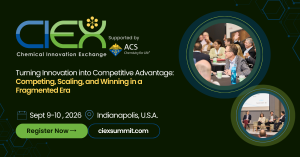
AI Plant Performance in Chemicals: Why the Bottleneck Isn’t Technology
AI plant performance in chemicals starts with one deceptively simple problem: turning plant data into decisions that actually change outcomes — and for most organizations, the bottleneck is not the technology. Lewis Sweet, General Manager Global Refining and Chemicals at Honeywell, brings to CIEX North America 2026 a perspective shaped by working at the intersection of industrial technology and chemical plant operations across some of the world’s most complex refining environments.
In this interview, he shares where AI is already moving hard metrics in plant operations, what is genuinely preventing organizations from scaling proven use cases across sites, and how the shift from volume growth to value creation is reshaping investment priorities in refining and chemicals. The answers are more direct — and more uncomfortable — than most transformation agendas tend to acknowledge.
CIEX: Without giving too much away, what is the core message of your session and what would you like delegates to remember?
Lewis Sweet, General Manager Global Refining and Chemicals, Honeywell
Lewis: The next wave of competitive advantage in chemicals won’t come from more innovation — it will come from better execution. What are the human and machine factors preventing us from closing the loop: using greater degrees of technology in an increasingly dynamic global economy? My message is simple — technology is not the bottleneck. We are.
The next wave of competitive advantage in chemicals won’t come from more innovation — it will come from better execution.
CIEX: What motivates you to join CIEX this year – and where are you most looking to learn from peers at this event?
Lewis: CIEX brings together senior leaders facing the same pressures — margin, sustainability, and complexity — creating a rare environment for practical, peer-level discussion. I’m most interested in how leaders are prioritizing investments and where digital initiatives are truly moving hard business metrics versus where impact is still limited.
CIEX: How has your approach to balancing volume growth and value creation evolved in recent years – and what’s one decision you’ve made here that would’ve been unthinkable three years ago?
Lewis: The focus has shifted from volume growth to value creation — getting more out of existing assets rather than adding new capacity. One clear change is the increase of low- and zero-capex digitization projects. Pay-for-performance and outcome-based models are more market-fluid than SaaS and incentivize all parties toward the right behaviors.
CIEX: Where is AI-enabled innovation already moving a hard business metric, and where is it still not delivering?
Lewis: AI is delivering in areas like process optimization and operator decision support, where it can directly influence performance. The challenge is not capability — it’s scaling. Many organizations have proven use cases, but embedding them consistently across operations using deterministic models scales at 1:1.
CIEX: Have we over-optimized for speed at the expense of resilience — or the other way around?
Lewis: Sustainability and economics are increasingly aligned, especially in areas like energy efficiency, where lower cost and lower emissions go hand in hand. The key is prioritizing initiatives that deliver both, while staying disciplined about where the trade-offs don’t yet justify the investment.
CIEX: Looking ahead, what factors and capabilities will define competitive advantage in the chemical industry over the next few years?
Lewis: Competitive advantage will come down to execution, adaptability, and integration — how well organizations deliver consistent performance, respond to change, and connect data to decision-making. Technology alone won’t differentiate; the ability to scale and operationalize it will.
Technology alone won’t differentiate; the ability to scale and operationalize it will.
Is Your Plant Closing the Loop Between AI and Measurable Performance?
If AI is delivering in pockets but not yet moving the needle at scale, you are not alone — and the gap is rarely where you expect it.
CIEX is a forum where peers from 3M, Dow, Eastman Chemical, Honeywell, Huntsman, Albemarle, Momentive, Cabot, and Wanhua Chemical Group are working through the same challenge — openly and at a senior level.
AI-Enabled Chemistry: How Hexion Is Moving Beyond the Commodity Model
AI-enabled chemistry is reshaping how the chemical industry creates value — and the stakes have rarely been higher. Geopolitical uncertainty, changing customer expectations, and the pressure to move beyond commoditized products are forcing companies to rethink not just what they produce, but how they compete. Few leaders are moving faster on that shift than Michael Lefenfeld, President and CEO of Hexion, who since 2023 has been transforming the company from a commodity supplier into a technology-driven leader in advanced materials.
A scientist and serial entrepreneur holding over 100 patents, Lefenfeld brings a rare combination of technical depth and CEO-level strategic perspective to CIEX North America 2026. In this interview, he makes the case that AI’s real opportunity in chemicals is not incremental efficiency — it is a fundamental rethink of how a chemical company creates value, moving beyond commoditized products toward intelligence-driven, high-value customer solutions.
CIEX: What is one idea about the future of the chemical industry that you hope challenges the audience’s thinking?
Michael Lefenfeld, CEO, Hexion
Michael: What if we’re asking the wrong questions about AI?
Most of the conversation in our industry is about making existing work faster. Better productivity, more automation, faster reporting. Those are real gains, but not the story that our industry should care about.
The real story is the fact that AI gives us a chance to rethink how a chemical company actually creates value. Not incrementally. Fundamentally.
For more than a century, we’ve competed by developing better molecules, scaling production, and driving continuous improvement. That foundation is certainly not going away. But now we’re in a period where chemistry has the chance to become part of a much larger value system, one where chemistry, manufacturing, customer operations, and AI continuously learn from and influence one another. Plants that don’t run at steady state. Variability, which used to be a cost center, now becoming a source of competitive intelligence. That’s an entirely different business.
And here’s what really excites me. That shift doesn’t just create value for customers. It creates entirely new value for chemical manufacturers too: deeper customer relationships, new service models, revenue streams that didn’t exist before. Our product business doesn’t disappear. It becomes the foundation that everything else is built on.
If people leave my keynote asking themselves, “What business are we really going to be in ten years?” then we’ve had the right conversation.
CIEX: What motivates you to join CIEX this year, and where are you most looking to learn from peers at this event?
Michael: I always tell my teams, the most innovative ideas in any company don’t come from the boardroom. It happens in the cafeteria.
That’s where an engineer bumps into someone from operations. Where commercial teams push back on R&D. Where someone asks a question nobody else thought to ask in a meeting. Innovation usually starts with a conversation, not a presentation.
CIEX is the chemical industry’s cafeteria. It’s a place where CEOs, scientists, and technology leaders come together, not just from different functions but from across the breadth of our industry — specialty chemicals, materials, petrochemicals — to wrestle with and debate questions none of us have fully answered yet. For me, that kind of cross-pollination is where the really interesting stuff happens.
And the best part? Some of the best conversations that happen at events like this don’t stay as conversations. They turn into partnerships. Many of our biggest breakthroughs at Hexion have come from working with companies that bring completely different capabilities to the table. No single company, no single sector, is going to reinvent this industry on its own.
I’m absolutely looking forward to hearing where people are succeeding. But honestly, I’m just as interested in where they’re struggling. Those conversations are usually more valuable, and sometimes they become the foundation for breakthroughs and partnerships that move the industry forward.
CIEX: How has your approach to balancing volume growth and value creation evolved in recent years, and what is one decision you have made here that would have been unthinkable three years ago?
Michael: For all of my career, volume and value have been tightly linked. The more chemistry you sold, the more value you created for the business. Today, I’m not sure that’s true anymore.
Volume still matters. Manufacturing efficiency still matters. After all, at scale, a one-cent improvement in operating performance can create millions of dollars of financial value. Those fundamentals aren’t changing. What’s changing is where the next layer of growth comes from.
Here’s a decision that would have been hard to imagine a few years ago. Hexion is currently investing in technologies that help customers optimize their own material usage, even when that means they buy less product from us. On the surface, that sounds like the wrong direction.
But here’s what we’ve learned. If we help a customer reduce resin usage or increase throughput, we’ve built a stronger relationship than we ever could by simply selling more resin. You might ask, how is it that we won’t cannibalize our business? Because as we help our customers improve, we’re also building a second business on top of the current one: performance services, intelligent software, new commercial models, new markets.
The companies that lead this industry over the next decades will combine great chemistry with intelligence, services, and outcomes. Great chemistry alone won’t be enough.
CIEX: Where is AI-enabled innovation already moving a hard business metric, and where is it still not delivering?
Michael: Honestly, we’re all still in the early stages. The companies that expect AI to walk in and move the needle right away are mostly finding out it doesn’t work like that. It won’t fix broken processes. It won’t replace operational discipline. It won’t replace experienced people. If strong fundamentals aren’t there, AI just fails faster.
Where we are seeing real promise is in manufacturing. Plants generate enormous amounts of data, and operators have always had to make decisions in the middle of all that noise. Quality, throughput, energy, raw materials, maintenance, cost — all moving at once, limited real-time data, all connected. What AI does well is make sense of that in real time and get the right information to the right person before the moment passes. The decisions are still human. They’re just better ones. That’s where we think the early wins are going to come from.
I believe the bigger opportunity is still largely untapped. Most companies are using AI to optimize individual tasks and processes. What changes the game is connecting the whole business: imagine R&D learning continuously from manufacturing, manufacturing learning continuously from customers, chemistry getting smarter because every part of the system is learning together. When that happens, AI stops being another technology project and starts becoming a genuine competitive advantage.
CIEX: How are you approaching sustainability priorities alongside broader economic and commercial considerations? Where have you had to draw the line on sustainability because the economics did not hold?
Michael: Something customers taught me early: they rarely wake up asking for sustainability. They wake up asking how to reduce waste, improve yield, lower energy costs, and make their operations more competitive.
But if we solve those problems well, sustainability usually follows. That’s changed how I think about the whole topic. I don’t see it as a separate initiative anymore. I see it as the outcome of running a smarter, more efficient business and making green chemistry principles the foundation of all innovation.
That said, not every sustainability idea makes economic sense today, and I think it’s important to be straight about that. Some technologies need more time. Some markets aren’t ready. In those cases, the answer isn’t to force adoption. It’s to keep advancing the science until the economics become compelling. Pretending otherwise doesn’t serve anyone.
What’s interesting is that AI is accelerating sustainability programs. It’s surfacing efficiencies that were always there but impossible to see before. When the economics follow the science, sustainability stops being a cost of doing business and starts becoming a competitive advantage.
CIEX: Looking ahead, what factors and capabilities will define competitive advantage in the chemical industry over the next few years?
Michael: Ask me this same question in ten years and I think we’ll smile at how narrowly we used to define a chemical company.
The winners won’t just make better products. They’ll build better systems. Chemistry will always be the foundation, but the companies that lead will integrate AI, manufacturing intelligence, application expertise, and customer data to create value that competitors can’t easily replicate. They’ll move faster because they’re learning faster. Intelligence scales in ways that headcount and capacity never could.
We’ll also see business models that barely exist today. Performance services. Intelligent software. Adaptive formulations. The product business won’t disappear. It becomes the platform that enables entirely new businesses to grow alongside it.
For twenty years, software transformed the digital world. I believe the next twenty years belong to the physical world: manufacturing, energy, construction, chemicals. That’s where the complexity lives, and complexity is where the real opportunity is.
I don’t think we’re watching the chemical industry adapt to AI. I think we’re watching it redefine itself.
Is Your Business Model Built for the Next Era of Chemical Value Creation?
At CIEX North America 2026, Michael Lefenfeld takes the stage in the session AI-Enabled Chemistry as a Service — a keynote built for leaders ready to move beyond the commodity model and rethink how chemistry creates value in the age of AI.
Leaders from 3M, Dow, Eastman Chemical, Honeywell, Huntsman, Albemarle, Momentive, Cabot, and Wanhua Chemical Group will be in the room.
AI Adoption in R&D: A Corporate Scientist Perspective from 3M
AI adoption in R&D is reshaping how scientific organizations work — but few voices in that conversation come from someone who has spent over 30 years at the bench. Jayshree Seth leads generative AI use cases across 3M’s research organization, holds 80 patents, and brings to CIEX North America 2026 a practitioner’s perspective that is rare in the current AI debate.
Her position is clear: successful AI adoption in R&D does not start with the technology. It starts with something most organizations overlook — and the implications for how R&D teams adopt, scale, and ultimately benefit from generative AI are far more significant than most transformation agendas currently reflect.
CIEX: What is the key message of your session and what should delegates take away for their own R&D organizations?
Jayshree:My key message is simple: don’t start with the technology, start with the pain points – go with the workflow.
Jayshree Seth, Corporate Scientist and Chief Science Advocate, 3M
Map where the pain is and then let AI address it specifically. What happens when you do this is that people naturally begin reorganizing around AI, not because they were told to, but because they experience its benefits firsthand.
We are seeing that AI fluency within familiar workflows can intuitively spark two things simultaneously – one is meaningful discussions about incremental improvements, and the second is organic conversations about potential AI-first workflow redesign.
The other key takeaway is that driving adoption requires more than mere deployment. Change management is key – communicating benefits with real examples, improving modalities through feedback, and influencing through testimonials from lead users – all backed by visible commitment from leadership. The organizations that do all of this together will not only get adoption but can also build AI fluency as an organizational capability. And that can become a real competitive advantage.
CIEX: What brought you to the conference this year, and what are you most interested in learning from other R&D leaders?
Jayshree:I have been in the Corporate R&D ‘trenches’ for over 30 years, and what brings me to any R&D gathering is curiosity about how others are solving problems we all think about every day. As I lead the effort for use cases of generative AI in R&D, I know that mine is one lens in one organization. Forums like CIEX give us access to a community of practitioners across the chemical and specialty materials industry who are navigating similar transformation – and I look forward to learning and sharing.
Specifically, I’m interested in how organizations are handling the human dimension of this transition. That is a people and culture question as much as it is a technology question. I am also curious regarding measurable impact, where it is emerging and where there are still large gaps between the promise and the reality.
With Generative AI, almost everyone, regardless of expertise or seniority, is like an immigrant navigating genuinely unfamiliar territory. Given that, I believe leaders have a specific role in cultivating each element of the mindset needed: modeling iteration, rewarding experimentation, normalizing change, building navigational judgment, and elevating the voices of those who have crossed the territory the hard way.
CIEX: How has your thinking on AI in R&D evolved, and what is the one shift in how R&D work gets done that would have seemed unlikely three years ago?
Jayshree:As the models and their capabilities have evolved, a fundamental shift in the front end of the innovation process has become possible. This is particularly significant for R&D organizations where literature synthesis, patent landscaping, and competitive intelligence can consume enormous amounts of expert time. I prefer to call AI as I see it – “artificial diligence” – the tireless, unsaturable capacity to process volume that no human can match.
A technical expert can read ten papers before their thinking gets saturated. AI reads a thousand without tiring – and keeps going. It is a diligent partner for our intelligence. So, the shift that would have seemed most unlikely three years ago is this: the bottleneck in R&D is no longer access to information – it’s judgment about what to do with it. It’s no longer about who has the best data, the deepest literature review, the broadest patent landscape.
Generative AI has democratized access to all of that. What it cannot democratize is the wisdom to know which signal matters, which assumption is untested, and which confident-sounding answer is wrong. That wisdom still lives in people. And protecting it, cultivating it rather than assuming AI has replaced it, that is important for R&D leaders.
CIEX: Where is AI already delivering measurable impact in R&D, and where is it still not meeting expectations?
Jayshree:Generative AI is brilliant at breadth – pulling together large bodies of literature, patent landscapes, competitive intelligence, and regulatory frameworks – and presenting a coherent picture and usable taxonomy faster than any team could. That acceleration at the front end of the innovation process is real and can be measured – helping R&D teams move from data to insight faster and with broader context. It can free scientists to spend more time on the work that requires human thinking and judgment and less time on the work that requires human diligence or endurance.
But where AI is brilliant at breadth, it is well known that it can be brittle at precision. In R&D, precision is everything. So, I think there is what I call a “Show Me the Money, Show Me the Source” divide. On the business side, leaders are increasingly using AI-generated insights to demand big outcomes. While technical teams are asking – show me the source. That tension is real, it is growing, and it is where I see the most unmet expectations. This is not a fundamental disagreement – it’s just that the two groups are operating from different professional obligations and standards of evidence, and the gaps need to be bridged.
CIEX: Are we at risk of optimizing R&D for speed at the expense of creativity and long-term innovation?
Jayshree:Yes – it can be a real risk. The pressure to demonstrate AI-driven productivity gains is real, and speed is the easiest thing to measure. But in R&D, the things that are easiest to measure are seldom the most important.
In many ways, it is the classic dilemma of exploration versus exploitation, and generative AI can be an extraordinary exploitation engine. It refines, optimizes, synthesizes, and accelerates faster than we ever could. But breakthrough innovation largely lives in exploration – in that uncommon connection, the failed experiment that reveals something new, the hypothesis that seemed wrong and turned out to be right for a different reason.
My concern is that organizations under pressure to show AI ROI may unconsciously tilt more toward exploitation – the fast, the measurable, the defensible. And so may be the case with competitors. And when everyone optimizes the same way, using the same AI, differentiation disappears.
So, I think it is important to protect the conditions under which creativity happens. Protect time for exploration, such as the 15% culture we have at 3M. And be patient with the non-linear, winding paths that build the kind of wisdom AI cannot replicate.
After all, the most important capabilities are still the ones that have always mattered – balancing creative freedom with business rigor, celebrating intelligent failure alongside successes, and encouraging collaboration and empowerment – these will continue to define competitive advantage even in the age of AI.
Hear Jayshree Seth at CIEX North America 2026
Her session — Gen AI for R&D: Go With the (Work)Flow — addresses how to move generative AI from isolated deployment into workflows that R&D teams actually trust and build on.
September 9–10, 2026 | Indianapolis | Senior leaders from 3M, Dow, Eastman Chemical, Honeywell, Huntsman, Albemarle, Momentive, and Cabot.
What you will leave with:
Frameworks for mapping AI to high-impact R&D workflows
Adoption models that build lasting AI fluency across the research organization
Direct exchange with CTOs, CDOs, and VPs of Innovation